
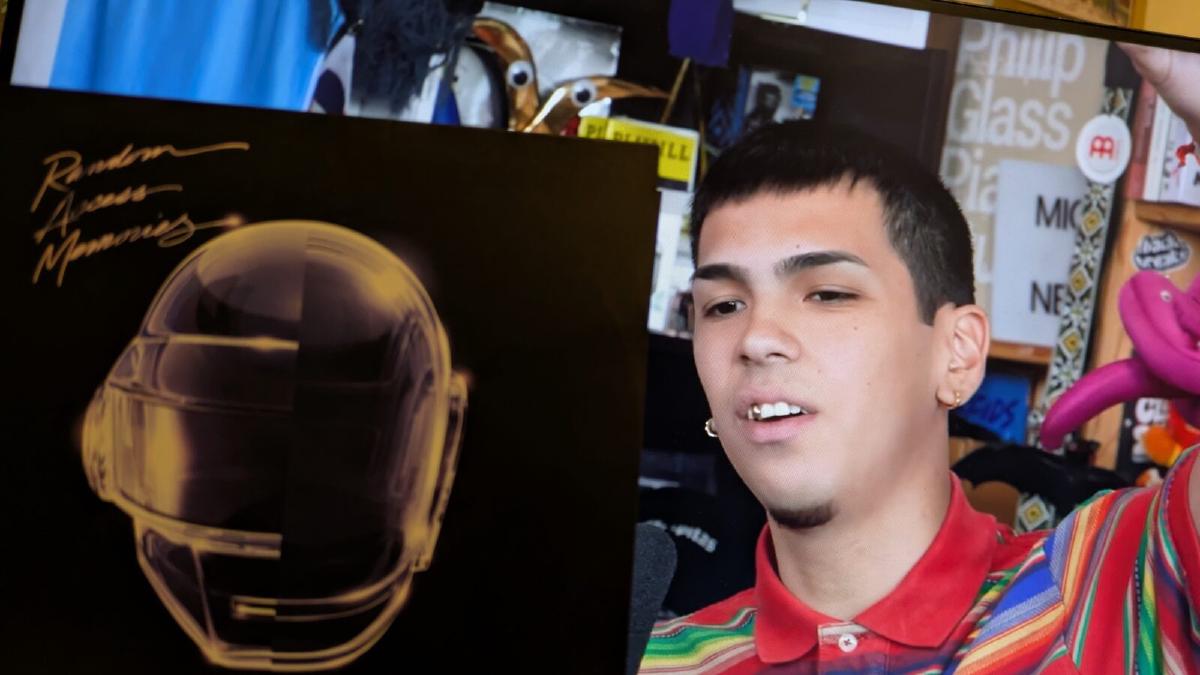

First things first: play the video below, turn the volume down to 15%, hide that window (we only need the audio) and keep reading…
It is striking how fast something becomes obsolete in a very short time, thanks to something that spread like a virus and changed reality overnight. Not long ago I spent my days reading and writing a lot of code the traditional way; now it has been a very long time since I programmed anything elaborate on my own. Everything I do day to day is give instructions; to a large extent that is the point: we keep giving instructions to solve concrete problems. Code is still part of the craft, but it is more ephemeral than ever, just as assembly lost much of its relevance after C/C++.
Machine code still exists; the low layers of an operating system kernel work at that level. It didn’t die, it just stopped carrying the weight it once had, because something was created that guaranteed it would work. Even so, being able to understand that level of complexity is still useful and highly respected.
History repeats itself, but with nuances, since it is still being written: the software engineer is still important; however, the skills and competencies the role requires are constantly changing, or perhaps they always were. We are taking a step that the industry never forced us to take before.
You are probably finishing the song by now. Let’s think about Milo J: I met him recently or, rather, I became a fan recently. His new album “La Vida Era Más Corta” kept going around in my head for a long time; maybe it’s just me, but I invite you to listen to it all the way through. After watching a bunch of interviews with “el Pibe de Morón”, I realized that nothing is really as far from us as we think. It’s curious how many parts of his songs are samples of other songs (and when I say many, I mean a lot). Here you can see the full list of samples.
Coincidentally, several of those samples are part of the punch moments that resonate so much in my head. All thanks to an artist who is not Milo J, someone who set out to compose a song for themselves, for their time, for an audience and, without knowing it, for an unforeseen future in which it would be part of a new album. And what if that author had borrowed a few chords, a few lyrics from someone else, and so on…? As the famous saying goes: “if I have seen further, it is by standing on the shoulders of giants”.
Just like Milo J, we have another great example: Daft Punk. I don’t think there is anyone on earth who hasn’t heard at least a part of one of their compositions. In case you are part of that 0.001% of people who still don’t know them, this is Daft Punk. They are a renowned musical duo, popularly known for working magic with samples and having a repertoire full of them, among a thousand other things. Here is a compilation of several of the samples Daft Punk used throughout their songs.
Including parts of existing songs never stopped their massive success or their high standing in music culture to this day. What did the success of Daft Punk and Milo J depend on? The lyrics and sounds used as samples are not personal creations, but a reuse of something that already exists: an import into their rhythm and structure, an implements in their genre and their tunes, an export and publish for a future musical world; without belittling all the effort, talent and instinct it takes to put each piece together, feed back into it and bring great musical works to life.
Afterwards I asked myself: I use frameworks, libraries, programming languages, development strategies, work methodologies, I identify and apply design patterns, make architecture decisions, work with agentic workflows, among other things; all of them already existing and not really creations of mine. Am I a guy who samples? A serious question. Short answer: yes.
After turning it over a thousand times, I realized that the forced step the software industry never made us take was right under my nose. For example, a frontend, backend or fullstack role used to have a clear and well-defined scope and set of responsibilities; although for now they keep the same names, expectations are changing and people are talking about a transition towards the Product Engineer, a generalist able to understand problems with wider boundaries, translate business needs, keep things consistent, operate autonomously from start to finish and deliver a high-value result. However, I think we already have some of these qualities. If you have been working in this field for a long time, it is something that gets internalized with experience; if you noticed it much earlier, it surely helped you stand out time after time; and if it is new to you, it is worth taking that big leap of faith.
Therefore, it is up to us to look beyond the obvious, dare to explore and reuse the sea of knowledge, strategies and novelties that come out every day, take a stroll through the past, observe the present closely and imagine the future. Code is cheaper to produce than ever, while talking about the product, finding a niche without saturation, understanding customers’ needs, validating ideas and testing the infrastructure and the code (generated at speeds never seen before) so that everything fits together properly in a world moving at a very fast pace is chaotic.
As sampling artists, it is up to us to move the pieces and make them fit to release the next hit.
If you liked this post, save my RSS or find me on the different social networks as cr0wg4n. I will have a newsletter very soon. Until the next post.
References#
Here are some videos that help to understand the current state of the art: